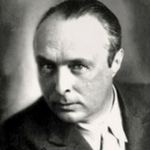

Laban and Embodied Cognition

Rudolf Laban’s use of movement-based observational techniques anticipated the notion of “embodied cognition” by several decades.  In his writings in the 1940s and 50s, Laban already had identified “mental efforts” — namely those of giving attention to what must be done, forming an intention to act, and finally taking decisive action — as stages of “inner preparation for outer action.”

Laban went on to associate each of these mental efforts to one of the motion factors, according to the following scheme:

“The motion factor of Space can be associated with man’s faculty of participation with attention.Read More

Assertion and Perspective in Making Decisions

movement pattern analysis

A Movement Pattern Analysis profile reflects how an individual balances Assertion (the exertion of tangible movement effort to make something happen) with Perspective (positioning oneself to get a better view of the situation).  In the pilot study group, some individuals emphasized Assertion, while others favored Perspective.

The hypothesis was that those high on Assertion would need less information and come to a decision more quickly than those high in Perspective.  And this proved to be the case.  With regard to these two dimensions, the MPA profile showed predictive validity.… Read More

Testing Movement Pattern Analysis

Over the past six years, I have been part of an interdisciplinary research team testing Movement Pattern Analysis (MPA).  The team consists of movement analysts, political scientists, and psychologists.  We have been comparing the Movement Pattern Analysis profiles of a participant group of military officers with their performance on a set of decision-making tasks completed in a laboratory situation.  Our aim is to assess how well their MPA profiles correlate with their decision-making behaviors in the lab.

Existing research has highlighted two dimensions representative of individual differences in decision making – how much information a person needs and how long it takes for the individual to come to a conclusion.  … Read More

Movement Study at the Cutting Edge

rudolf laban

Movement Pattern Analysis is based on the premise that patterns of body movement reflect cognitive processes involved in making decisions.  This premise usually is met with skepticism, for at the level of popular consciousness, mind and body are still separate entities.

However, mind and body are no longer being viewed as separate entities in many academic disciplines.  “Embodied cognition” – the notion that moving and thinking are intertwined – is gaining traction among philosophers, linguists, developmental specialists, and neuroscientists.

The interconnectedness of thinking, feeling, and moving has long been obvious to movement specialists – at least experientially.  … Read More

A Life for Dance

Laban’s autobiography, A Life for Dance, is a curious book, but one that reveals a great deal about his creative vision and theatrical activities.  As he notes in the letter to his publisher that opens the book:

“I recount in my book how a human being makes his way through thousands of circumstances and events.  Since this person happens to be a dance master or even a dance-poet, the book will frequently speak about the precious little-known art of dance. … Read More

Observing Movement, Observing Life

In Mastery of Movement, Laban asks readers to observe a person in everyday life, a person portraying a character in a mime scene, and a dancer performing a national or period dance.  Observers are to analyze the use of the body, along with the use of space, time, and weight.

This is a useful exercise for any actor; it is also a task that Laban set for himself.  In his autobiography, Laban describes his first experiences as a young and very idealistic artist-to-be. … Read More

Laban’s Dramatic Imagination

One challenging aspect of Laban’s Mastery of Movement is his description of many dramatic scenes meant to be embodied by the reader.  These scenes involve multiple characters, various dramatic conflicts, and several changes in mood on the part of all the characters involved.

Laban wants the reader to get up and mime these scenes, thinking about how the body would be used, where movement would go in the space around the body, and what kind of efforts would appear and change.  … Read More

Gods, Goddesses, and Demons

In Mastery of Movement, Rudolf Laban invokes gods, goddesses, and demons in his discussions of the “chemistry of human effort.”

“Gods as conceived by primitive man were the initiators and instigators of effort in all its configurations,” writes Laban.  “The strange poetry of movement that has found expression in sacred dance enabled man to build up an order of his effort actions, which is valuable and understandable to this day.”

Laban goes on to describe floating and gliding goddesses, divinities of joy that flick and dab, gods that wring, slash, and press, and demons that punch. … Read More

Rudolf Laban – Man of Theatre

Laban’s life work was to create a rich palette of movement options from which a performer could draw.  By the time he wrote Mastery of Movement, he had a lifetime of experience observing movement and working with dancers and actors, which he distilled into this intriguing work.

Ironically, Laban’s own creative methods and experimental dance and theatre works are little known.   However, recent re-creations of work mounted by Valerie Preston-Dunlop, Alison Curtis-Jones, and Melanie Clarke provide glimpses of his work and methods that are useful in illuminating aspects of Mastery of Movement.Read More

Laban Is Good Company

I have been re-reading Laban’s autobiography in preparation for teaching “Mastering Rudolf Laban’s Mastery of Movement.  Laban’s writings are evocative, and I always find him to be good company.

Laban and I have seldom met in the most luxurious of settings.  During my seven years of doctoral and post-doctoral research, he and I met in a windowless room in the top of the University of Surrey library.  Here he kept me company under fluorescent lights as I engaged with his handwritten musings on yellowing sheets of paper and tried to make sense of geometric sketches in colored pencil. … Read More