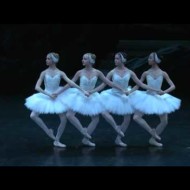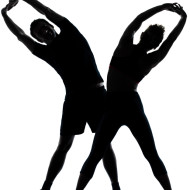
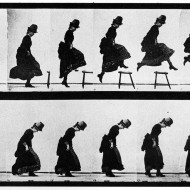
Human movement is a dynamic and ephemeral phenomenon. It disappears without a trace and leaves no artifact behind. Consequently, movement has been very difficult to study. The means for capturing and preserving movement behavior in material forms are comparatively new and depend upon other extension systems. These include drawings and notations along with mechanical recordings such as instantaneous photography, film, video, and motion capture.
All extension systems amplify biological functions. For example, a knife does a better job of cutting than the teeth and a photograph extends the visual impressions of the eye.… Read More