
The Significance of Posture-Gesture Mergers

MoveScape Center

A Posture-Gesture Merger refers to a movement in which the dynamic effort quality and/or shape change is consistent through the body as a whole. Warren Lamb first identified Posture-Gesture Mergers as significant phrases in the ongoing stream of bodily movements that accompany speech. As he observed, “It’s not just Posture and Gesture but the merging element of the two which is the crux of the matter.”

Posture-Gesture Mergers (PGMs) are significant for the following reasons:
1. Unlike static postures, PGMs are dynamic physical actions.… Read More

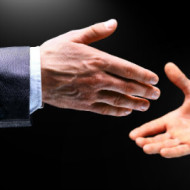
The Merging of Posture and Gesture

MoveScape Center, Denver

In his early days as a management consultant, Warren Lamb frequently helped client companies appoint employees. He would be called in to interview a short-list of people being considered for a position. His assessment, based upon the candidates’ movement patterns, would be used, in addition to other measures, to find the right person for the job.

Lamb was aware that some people simply come across better in an interview than others. They are able to manage the image they create adroitly, in part through their nonverbal behaviors.… Read More

Beyond Postures and Gestures

MoveScape Center, Denver, CO

Body language tends to focus on postures and gestures. Postures are still configurations of body parts. A military bearing involves a stiff uprightness. A bored adolescent will slouch. When sitting, the alpha male assumes the “power spread,” with legs apart and elbows out to the side. Thus postures are said to convey a person’s attitude.

Gestures are isolated actions of individual body parts. Some gestures are iconic, such as pointing the finger to indicate direction or shaking the head to indicate “no.”… Read More

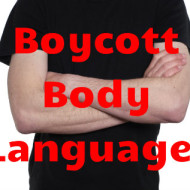
Boycott Body Language

MoveScape Center

As I mentioned in my last blog, popularity is seductive. The chance for serious movement analysis to garner publicity through the national media is almost irresistible. However, when serious study gets showcased as “body language,” the publicity does little to foster appreciation of movement.

A case in point is the March 7 story in USA Today bearing the headline, “Pentagon studies Putin’s body language to predict his actions.” The studies referred to involved legitimate analysis of movement patterns. Yet the press merely referenced this work as “body language.”… Read More

Why is Body Language Popular?

MoveScape Center, Denver, CO

There seems to be a great divide in the American public’s awareness of movement.

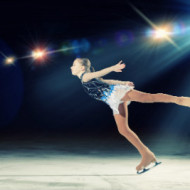
When it comes to watching sports, like the recent Winter Olympics in Sochi, the American viewing public seems perfectly happy to witness a progressive process of change. This appreciation of movement as movement accounts for the popularity of events like downhill skiing, figure skating, and ice dance, where Bergson’s “flux and continuity of transition” are particularly obvious.

When it comes to everyday activities, this appreciation evaporates. Movement is omnipresent in working and conversing.… Read More

Movement Versus Body Language

MoveScape Center

Body language tends to single out isolated gestures and still poses for purposes of study. Then it attaches psychodynamic interpretations to these snapshot. Thus “arms folded over the chest” means a person is closed. Lifting and exposing the palm signals flirtation, rubbing the nose indicates disapproval, and so on.

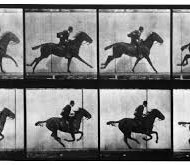
Body language isolates postures and gestures from the steam of ongoing movement in manner analogous to “instantaneous photographs,” such as those of Eadweard Muybridge. His photos recorded various moments in a series of actions.… Read More

Body Language and Social Order

MoveScape Center, Denver CO

In Body Language and Social Order, Albert Scheflen argues that body language is used for political control, manipulation, and the maintenance of power and class hierarchies. The book reveals how specific bodily behaviors in public places reinforce the status quo. Scheflen utilizes numerous candid photographs of men, women, and children to support his arguments.

When I first read this book many years ago, I found it deeply disturbing. I felt that body movement was a liberating force, not a binding one.… Read More

Imitation and Intuition: More Tools to Enhance Body Knowledge

According to Laban, human movement can be understood in three different ways.  It can be appreciated simply through the unreflective act of moving itself.  It can be grasped through objective analysis.  And movement can be interpreted by linking concrete actions with abstract ideas and feelings.

Different sorts of understanding arise for each perspective.  Movement analysis provides a means for observing with greater definition.  It slows the automatic process of interpreting simply on the basis of body knowledge.  By so doing, analysis supports taking a more objective approach to movement study and helps one transcend body prejudices.… Read More

Movement Analysis: Enhancing Body Knowledge, Transcending Body Prejudice

Rudolf Laban observed that movement can be perceived from three distinct angles:

  1. the “biological innocent”  — the person enjoying movement inwardly,  as a bodily experience,
  2. the “scheming mechanic” – the person who observes movement analytically and objectively from the outside,
  3. the “emotional dreamer” – the person who seeks the meaning of movement in the intangible world of emotions and ideas

Laban asserts that these three perspectives operate constantly in all of us.  Sometimes we favor one or the other view, and “sometimes we compress them in a synthesized act of perception and function.”… Read More

Body Prejudice

positive_or_negative_perception

Like body knowledge, body prejudice originates from our capacity to categorize and generalize on the basis of personal movement experience.  As I write in Beyond Words, second edition:

Over time, a positive or negative meaning comes to be associated with a certain type of movement.  If this meaning is automatically projected onto all similar movements, regardless of context and modifying details, an inappropriate and prejudicial reaction may result.

Just because a movement is pre-judged does not mean it is judged wrongly, but this is always a possibility.Read More