Rotational Symmetry in Dance

A symmetry operation has to do with moving a shape through space in various ways and repeating the shape. The pattern is created through repetition. In rotational symmetry, shapes are moved in equal distances around an imaginary axis. For example, flower petals arrayed around the center of the blossom have rotational symmetry.

Circle dances performed by a group are the most obvious example of rotational symmetry. But a soloist can also create rotational symmetry simply by making a series of quarter turns and repeating an action or pose.… Read More
Dancing and Painting in Laban’s Footsteps

In 1913 an obscure Eastern European painter named Rudolf Laban declared he was giving up painting to become a dancer.  I’m reversing Laban’s career path, yet I find the study of painting to be curiously similar to the study of movement.

Like the Impressionists, I’m interested in capturing the effect of light on colored objects – something almost as ephemeral as movement, especially when painting outdoors.

Just as you have to give up certain perceptual habits to really see movement, you have to break habits to really see color.… Read More

The Grotesque in Dance

Writings on the grotesque seldom discuss dance.  Yet, during the 1700s, Italian dancers trained in a “grotesque” style were in demand all over Europe.  These grotteschi combined French ballet technique with a vigorous athleticism and pantomimic skills to portray comic and “foreign/non-European” characters.  This historical precedent provides a clue to the creative uses of the grotesque.

The grotesque, above all, represents the Other.  The Other may simply be someone of another nation, race, or creed.  Or, within a given situation, the grotesque may depict “Otherness” by transgressing social norms. … Read More

Stir Your Creative Juices

My third recommendation is The Creative Habit: Learn It and Use It for Life by Twyla Tharp. It’s marketed as a “how-to book” with 32 practical exercises that anyone can use. “Exercises” sound like work, and heck, you’re on holiday.

So you don’t actually have to do any of the exercises. Instead dip into this book forthe pleasure of reading how a successful artist creates dances. While this is interesting in itself, Tharp’s book incorporates creative practices and quotations from other types of artists and professionals.… Read More

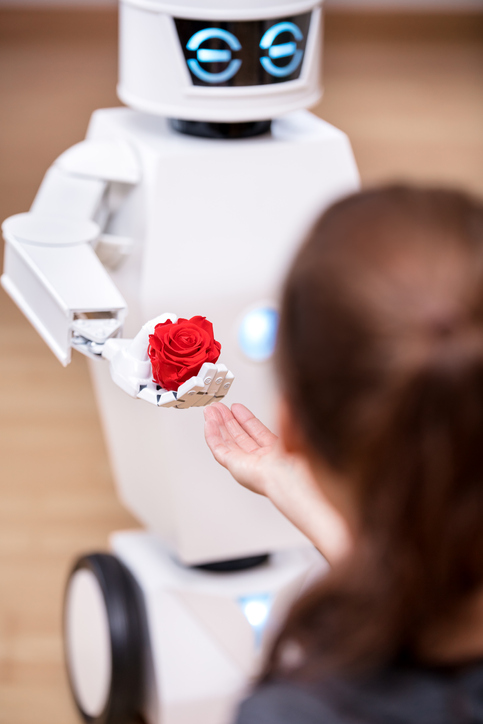
From Time and Motion Study to Dancing with Robots

In the first three Industrial Revolutions new sources of power and mechanical inventions necessitated careful study and training of human workers so that labor was safe, effective, and productive.  For example, the dancer and choreographer Rudolf Laban drew on his movement knowledge to address problems arising from the repetitive assembly line labor that characterized the second Industrial Revolution.

New concerns are voiced about upcoming technological changes.  Klaus Schwab, Chairman of the World Economic Forum, worries that the “Fourth Industrial Revolution may indeed have the potential to “robotize humanity.”… Read More

Dance Improvisation and Life Skills

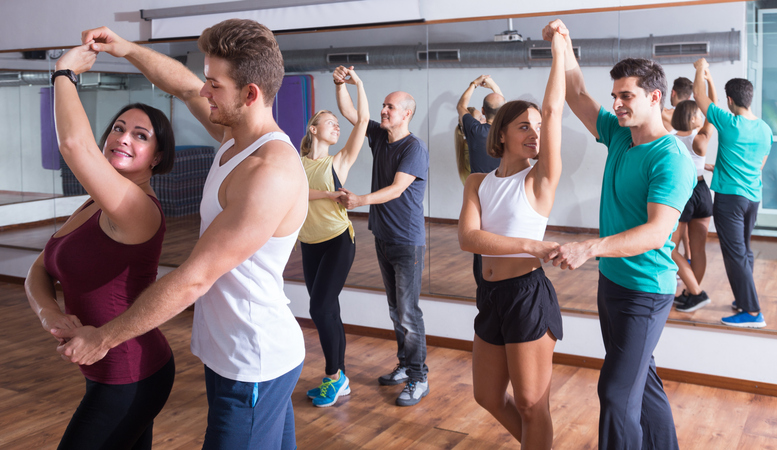
Social dance classes have become exponentially popular since I was at Stanford, with classes filling through online registration in less than a minute.  Lecturer Richard Powers, who launched the program in 1992, estimates that 15,000 Stanford students have taken his classes over the last 27 years.

Students interviewed for the May article in the Stanford Alumni magazine cite many “take aways” from learning ballroom dance that translate to other areas of life.  For example, one mechanical engineering student found that dancing was a way to empty his mind and be with his partner, equating the experience to meditation – only better!… Read More

Stanford University Catches Up

When I was a student at Stanford in the early 1970s, you could take some dance classes, but these were purely recreational and non-academic.  There was a wonderful modern dance teacher – Inge Weiss, a former Wigman dancer. There was no dance major, however. When I got serious about studying dance, I took a leave of absence, earning degrees through my PhD elsewhere.

Fast forward to 2005, when Stanford alumni who had published were invited to display their books during reunion activities.  … Read More

Dancing Art Nouveau

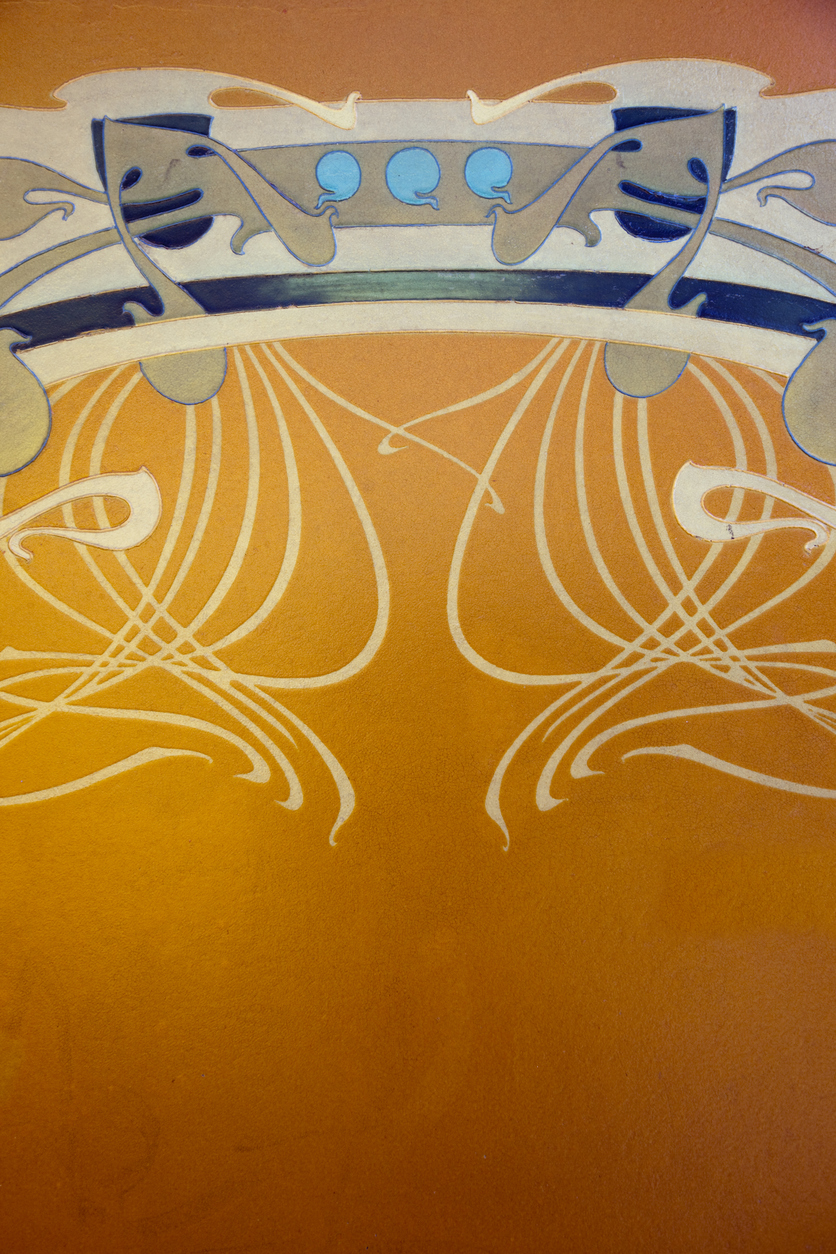
In his first career as a visual artist, Laban was closely involved in the Art Nouveau movement.  Literally meaning “new art,” Art Nouveau was a self-consciously modern movement focused on the applied arts rather than the fine arts.  The movement expressed itself in innovations in architecture, furniture, fabric, dishes, lamps, jewelry – redesigning the everyday objects that people use and the spaces they inhabit.  

In short, Art Nouveau aimed to break with tradition and change the shape of the modern world.Read More

Stability and Mobility

“Stability and mobility endlessly alternate,” Laban writes in Choreutics. This basic pattern underlies all movement through space. For instance, in a turning leap, spinning while flying through the air leads to a temporary loss of equilibrium. But when the feet touch the floor, there is a return to quietude and relative balance.

According to Laban, “movements containing dimensional tensions give a feeling of stability.” These fundamental lines of motion – up and down, across and open, backwards and forwards – are Laban’s stable prototypes.  Read More

Dance and Conflict

The Dance Studies Association (DSA) has chosen “Dance and Conflict” as the theme of its conference this summer in Malta. This promises to be a huge international gathering now that the Congress on Research in Dance (CORD) and the Society of Dance History Scholars (SDHS) have merged to form DSA.

I’m quite excited by this conference theme because dance is often considered to be a trivial pastime. The ways in which dance can bring people together and enable them to overcome differences is often overlooked.Read More