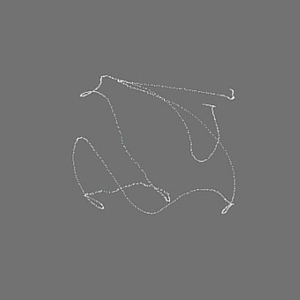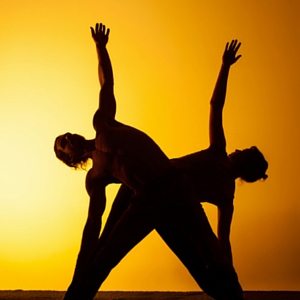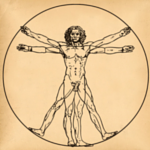
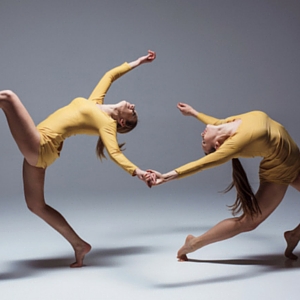
The sphere is Laban’s model for the space adjacent to the mover’s body. The center of gravity of the body is also the center of the kinesphere, which extends equally in all directions, establishing a boundary based on the areas of space that can be reached without taking a step.
According to Laban, “all points of the kinesphere can be reached by simple movements, such as bending, stretching, and twisting, or by a combination of these.”
Laban’s choreutic prototypes exploit this spherical movement space using symmetrical trace-forms that oscillate up and down, from side to side, and in front and behind the body.… Read More