
 Since 1991, Motus Humanus has been serving the Laban community by providing various services to support movement professionals as they develop their post-certification careers. These include the following.
Continuing Education for Movement Analysts. Motus Humanus has sponsored 14 advanced seminars addressing topics such as space harmony, effort phrasing, Bartenieff Fundamentals, teaching Laban Movement Analysis, observation and notation, movement psychology for actors, understanding movement patterns, and more. Our roster of instructors draws upon 40 leading Laban experts from the US and overseas. Over 265 individuals have taken advantage of these opportunities to deepen their movement analysis skills.
Networking Opportunities. Motus Humanus has organized 8 Roundtables on Professional Events in which over 100 individuals have presented their work. In addition, through our Adventure Grant program, we have provided over $2400 in funding for members to present their work at other professional conferences and workshops in Phoenix, Washington DC, Chicago, Brazil, Austria, and, most recently, Montreal, Canada.
And that’s not all. Read more in the next blog.
 In 1991, Charlotte Honda, Kaoru Yamamoto, and I formed
 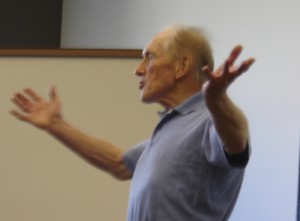 Warren Lamb began his career under the tutelage of movement theorist Rudolf Laban and management consultant
 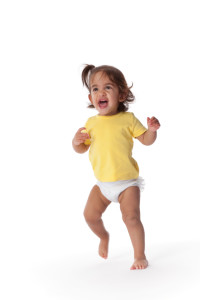 At the same time, Lamb’s thinking about adult movement was influenced by his work with Kestenberg. Lamb had felt for some time that flow did not have equal footing with the other motion factors of weight, time, and space. This conviction grew as Lamb joined Kestenberg’s Child Development Research group, meeting with them on an average of seven times a year for 15 years. His involvement with her longitudinal studies of movement from birth to early adulthood added to his conviction that Flow should be interpreted independently. Lamb described their discovery in the following way: “As babies we compass a full range of Flow variation, then as we grow up this diminishes as we develop Shape and Effort ranges.”

 These individual patterns only become apparent over time. To capture an individual’s movement fingerprint requires patience, for the pattern emerges gradually. For this reason, the interview used to collect data for a Movement Pattern Analysis profile is lengthy, running close to two hours.