
Twenty-one brave readers on four continents began the Tetra seminar, Decoding Laban’s Choreutics on March 26th. This “great books” correspondence course is focused on Laban’s posthumously published masterpiece, also known as The Language of Movement.

Over a six-week period, we are exploring the book two chapters at a time. I use the word “exploring” purposefully, for I see this course as a journey of discovery for all twenty-two of us.
It is certainly proving to be a journey of discovery for me. As the guide, I have two tasks. First, I assign questions to provide a focus for each reading assignment. Secondly, I write a commentary on the assigned reading. These commentaries provide background information to help illuminate Laban’s thinking, link themes that recur across chapters, and, in some cases, clarify what Laban appears to be saying.
I have always found some parts of the book to be mystifying. I don’t expect to be able to dispel all the mysteries. However, I am finding that some confusion is due to errors, particularly in the illustrations and notations that accompany them. Perhaps someday an edition of this significant theoretical work can be published with an errata sheet!
For the moment, it is enough to have thoughtful companions and interesting exchange of views as the Tetra takes off.


 In the preface to Choreutics, Laban defines “choreography” as the “designing or writing of circles.” While we use the word today to designate composing dances, Laban was obviously familiar with the origins of the term, which come from two Greek words – khoros and graphein.
 In Choreutics, Laban mentions in passing a dizzying array of subjects —
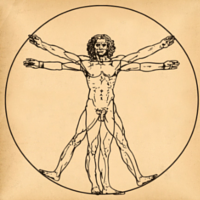 One thing many readers have difficulty grappling with in Choreutics is Laban’s geometricizing of the dancer’s space. Laban’s first career as a visual artist helps to explain this use of geometry.
 In the previous blog, I quoted Rudolf Laban’s characterization of choreutics as “the art, or the science” of movement study. Our postmodern perspective draws a hard line between art and science. But this was not the case when Laban was coming of age at the turn-of-the-century.
 Choreutics is in many ways a straight-forward presentation of Laban’s movement theories. However, more than any of Laban’s other books in English, Choreutics is colored by Laban’s worldview.
 Around 1913, Rudolf Laban abandoned his career as a visual artist to enter the field of dance. At the time, dance was a discipline defined more by what it lacked than by what it offered. Laban focused his energies on altering such conditions.