
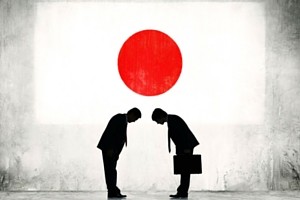
 I have long been fascinated with the ritual of bowing in Japan. Clerks in a hotel bow when you enter the lobby. They bow when you finish checking in. Conductors bow when entering a train car. They bow again when exiting. Groups of friends, particularly if they are older, with bow deeply when parting.
I can’t pretend to grasp the ins and outs of the etiquette of bowing. But bowing seems to serve as a boundary marker, delineating the beginning and ending of many social interactions. It is a sign of acknowledgement and a sign of respect.
Because I feel inept and somewhat embarrassed about trying to bow, I made a point on this trip to analyze the bow. It wasn’t easy. Bows seem to occur unexpectedly and they are often rapidly performed. Sometimes I caught myself imitating what I saw (when I had no reason for bowing). In any case, here is my rough analysis.
Arms at the side, cast the eyes down, hinge at the hips and tilt forward, softening slightly through the chest and tipping the head. All these actions should be performed almost simultaneously, returning immediately to an erect posture.
On this trip I also noticed what I call the “modified bow.” This is basically a head nod with a little bit of chest involvement. It is used to acknowledge someone (say, on entering a shop) or to express thanks at the end of a transaction or interaction.
The modified bow has many uses. For example, our daughter became exasperated when my husband raised his hand to thank a waiting driver as we used the pedestrian crossing. “They won’t know what that means,” she scolded. “You should have nodded.”
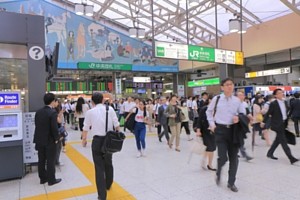 It is helpful to have a malleable
 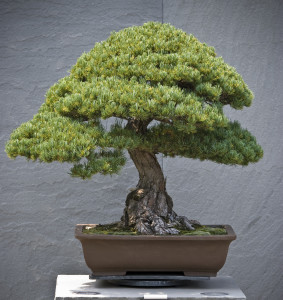 General space is a commodity not to be wasted in Japan. Heavily forested mountains cover most of the archipelago of islands. Flatland suitable for habitation and cultivation is precious. Wherever we have traveled in Japan, small rice fields, gardens, and orchards are sandwiched between a jumble of residential, commercial, and industrial buildings.
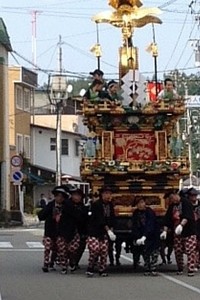 The Japanese also play hard, and some of the biggest, most labor-intensive parties take place in the street during traditional festivals. The fall festival in the city of Takayama, where our daughter teaches English, is one of the most spectacular.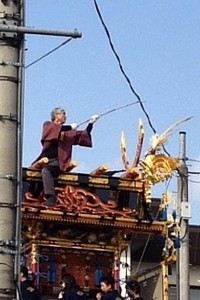
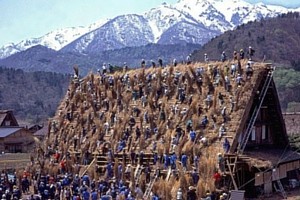 Working hard is a tradition in Japan. Nowhere is this clearer than in Shirakawa-go, a remote farming village located in the mountainous region of Honshu between Takayama and Kanazawa. Shirakawa-go, now a UNESCO World Heritage site, is an outstanding example of a traditional way of life perfectly adapted to the environment and the resident’s social and economic circumstances.
 I just spent three weeks traveling around Japan by train with my husband and daughter. Both of them can speak and read Japanese. I cannot. Consequently, I am useless when it comes to most verbal transactions.