
Esperanto and the Pan-human Language of Movement

With two million speakers worldwide, Esperanto is the most widely spoken constructed (rather than naturally evolving) language. Created by a Polish doctor in the late 1800s, Esperanto was meant to be an international language “to unite nations in common brotherhood.”


Movement is often characterized as a pan-human means of communication, a kind of international language that, like Esperanto, can foster mutual understanding among different peoples. In his more utopian musings, Laban subscribed to this idea – with a slight variation.Read More

Dancing Across Borders

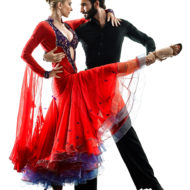
Tow-People-Dancing

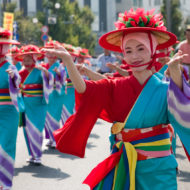
Once upon a time, dance was a local phenomenon.  Because dance was rooted in the community, Rudolf Laban hypothesized that “an observer of tribal and national dances can gain information about the states of mind or traits of character cherished and desired within the particular community.”  This is because “these dances show the effort range cultivated by social groups living in a definite milieu.”


Globalization is changing this. Popular dance forms in particular move across borders with remarkable speed. Tango, salsa, competitive ballroom dance, and hip-hop – to name just a few – are now performed around the world, often by social groups different in class, race, and temperament from the milieu in which the dance originated.Read More

Mastery of Movement, Mastery of Self

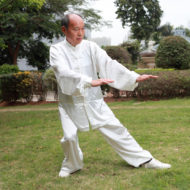
Asian-Man-Doing-Karate

Michael Murphy theorizes that “flesh and consciousness tend to coevolve” through the practice of movement and somatic disciplines.  Thus virtuosity – effort economy or the technical perfection of “effortless-ness” – may indeed have a higher function.

“Cutting Up an Ox,” by the Taoist philosopher Chuang Tzu, mirrors this idea.  


In this parable, a Chinese prince observes the virtuosity of his cook butchering an ox.  The cleaver “murmured like a gentle wind” and the ox “fell apart with a whisper.”  The prince exclaims, “Your method is faultless.”  Read More

The Future of the Body

Snowboarder-flipping-through-air

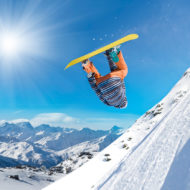
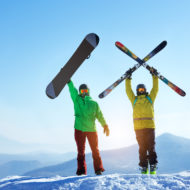
The physical capabilities of human beings are increasing, and this was quite evident at the Winter Olympics.  For example, snowboarders were doing feats in the qualifying runs that would have won medals at previous Olympics. Michael Murphy, co-founder of the Esalen Institute, has been fascinated by the expanding horizon of human potential represented by such exceptional athletes.  

In The Future of the Body, Murphy claims that “no culture has ever possessed as much publicly available knowledge as we do today regarding the transformation capacities of human nature.”Read More

Grace in Sports

Girl-Ice Skating

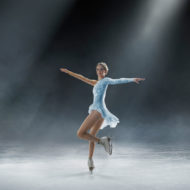
Grace has been characterized as the art of moving well through life.  In her ruminations on grace, dance critic Sarah Kaufmann, notes that “the graceful person is an image of our ideal selves, the embodiment of the dream we have of existing easily in the world.”

As her discussion proceeds, her observations begin to link with Laban’s characterization of virtuosity as effort economy.  According to Kaufmann, graceful actions “offer an image of that desirable state of affairs:  effortless mastery.  Mastery of the situation and of our own bodies, behavior, and emotions.”  Read More

The Magic of Play

Children-Playing-Hopscotch-Outside

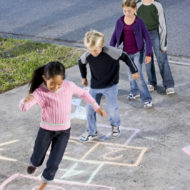
As I reflect on the seductive appeal of Olympic sports, I’m drawn to the notion that sport is play. It may be a livelihood and an obsession for the athletes themselves, but for spectators, a sport is still a game. But what makes an activity playful?

In his seminal book, Homo Ludens, Johan Huizinga identifies key features of play as the following:

* All play is a voluntary activity; it is free; it is never imposed as a duty or a practical task.Read More

Sweet Spots in Time

outfeilder-catching-baseball

Explaining exceptional athletic performance occupies not only coaches but inquiring spectators. The “Sweet Spot Theory” propounded by sports writer John Jerome provides some interesting insights.

To introduce his theory, Jerome uses the example of throwing rocks as a kid.  He spent many hours by a river, tossing rocks at discarded bottles.  He’d warm up his throwing arm by just lobbing rocks, noting that “there is a peculiar appeal in such rhythmic, repetitive activity.”  But mostly he recalls “the haunting power I felt on that occasional throw when I knew as the stone left my hand it was going to hit its target.”Read More

Seductive Virtuosity: The Winter Olympics

skier-snowboarder-on-mountain

Although I’m not a big sports fan, I must confess that I am completely seduced by the virtuosity of the Olympic athletes. The dangerous things they do so well are truly mesmerizing.

The danger is part of the appeal. Ice, snow, and steep slopes make perilous surfaces for even normal locomotion. What amazes me, however, is the extent to which the skiers, snowboarders, and skaters are increasingly airborne – turning, twisting, somersaulting – and somehow returning to earth intact and sliding on to the next fantastic trick.… Read More

Movement, Magic, and Transcendence

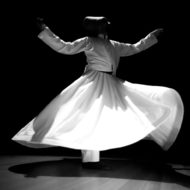
The magical powers of movement fascinated Laban.  Two anecdotes recounted in his autobiography highlight his keen interest – the first was observing a folk dance meant to make warriors immune to wounds; the second was witnessing Sufi rituals in which dancers actually stabbed themselves but the wounds closed immediately.  Laban mused, “Belief in a magic that conquers nature was surely just foolishness, a childish superstition – but even so, wasn’t there something great, something immense hidden behind it?”


This reflection, or perhaps quest, is reflected in many of Laban’s theoretical writings, where he hints at the spiritual value and transcendental power of movement.  Read More

Movement and Social Affiliation

As many anthropologists have pointed out, human beings are social creatures.  From infancy, and throughout life, we crave love, self-esteem and the positive recognition of others.  We need to feel that we belong somewhere – in a couple, a family, a club, or an identifiable sub-culture.  As Maslow notes, we “hunger for a place in a group” and will “strive with great intensity to achieve this goal.”

Surely belongingness passes into Laban’s realm of “intangible values that inspire movement.”  Interestingly, Laban links effort with “the growth of man’s communal sense.”  Read More