
Gods, Goddesses, and Demons

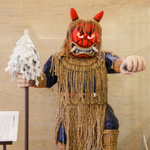
In Mastery of Movement, Rudolf Laban invokes gods, goddesses, and demons in his discussions of the “chemistry of human effort.”

“Gods as conceived by primitive man were the initiators and instigators of effort in all its configurations,” writes Laban.  “The strange poetry of movement that has found expression in sacred dance enabled man to build up an order of his effort actions, which is valuable and understandable to this day.”

Laban goes on to describe floating and gliding goddesses, divinities of joy that flick and dab, gods that wring, slash, and press, and demons that punch. … Read More

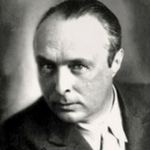
Rudolf Laban – Man of Theatre

Laban’s life work was to create a rich palette of movement options from which a performer could draw.  By the time he wrote Mastery of Movement, he had a lifetime of experience observing movement and working with dancers and actors, which he distilled into this intriguing work.

Ironically, Laban’s own creative methods and experimental dance and theatre works are little known.   However, recent re-creations of work mounted by Valerie Preston-Dunlop, Alison Curtis-Jones, and Melanie Clarke provide glimpses of his work and methods that are useful in illuminating aspects of Mastery of Movement.Read More

Laban Is Good Company

I have been re-reading Laban’s autobiography in preparation for teaching “Mastering Rudolf Laban’s Mastery of Movement.  Laban’s writings are evocative, and I always find him to be good company.

Laban and I have seldom met in the most luxurious of settings.  During my seven years of doctoral and post-doctoral research, he and I met in a windowless room in the top of the University of Surrey library.  Here he kept me company under fluorescent lights as I engaged with his handwritten musings on yellowing sheets of paper and tried to make sense of geometric sketches in colored pencil. … Read More

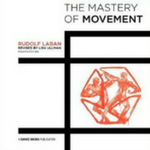
Mastery of Movement: Laban’s Other Masterpiece

Mastery of Movement is for body and effort what Choreutics is for space and shape – the most comprehensive treatment of Laban’s ideas in English.  The book has an interesting history.

The first edition was published in 1950, after Laban had published Effort and Modern Educational Dance, and after he had written (but not published) Choreutics.  Thus Mastery draws upon Laban’s endeavors in industry, education, and theatre.

The first edition is focused on movement for the stage, but Laban’s observations go well beyond this, addressing broader functions of movement in human life and evolution.… Read More

Why Laban Wrote Mastery of Movement

Laban wrote Mastery of Movement on the Stage (1st edition) “as an incentive to personal mobility.”  And indeed, the first two chapters provide a number of explorations organized around movement themes focused on body and/or effort.  Laban hopes to encourage a kind of “mobile reading,” as he explains in the Preface.

However, he also notes that there is something in the book for those who want to remain in a comfy chair.  That is, such readers can learn more about “thinking in terms of movement.” … Read More

What Makes a Good Team?

Long before diversity became a political issue, Warren Lamb was encouraging diversity in management teams.  His model of diversity was not based on age, race, creed, or gender. Rather it was based on decision-making style.

Lamb found that the best teams are made up of people who have different decision-making strengths.   That is, you need someone on the team who is strongly motivated to Investigate, someone who Explores, someone who is quite Determined, someone high in Timing and so on.

There is just one problem. … Read More

What Makes a Successful Leader?

In his observation and analysis of thousands of business executives, Warren Lamb found that leaders come in many shapes and sizes.  That is, there is no single “leader” profile — successful leaders can approach decisions in quite varied ways.

However, Lamb discovered that the characteristic pattern of motivation tapped by the MPA profile has much to do with how a leader defines his or her responsibility.

For example, a leader who emphasizes Attending will believe it is his/her responsibility to analyze the situation, consider alternatives, and make sure there is sufficient informed preparation prior to taking any action.  … Read More

Why I Became a Movement Pattern Analyst

Shortly after I completed my Laban Movement Analysis training (1976), Warren Lamb gave a short course at the Dance Notation Bureau.  I had been thinking a lot about the relationship between movement and psychology, but in vague and hypothetical ways.  What Lamb presented was much more concrete — it blew me away.

Fast forward 40 years, Movement Pattern Analysis still blows me away for three key reasons.

First, Lamb’s grounded theory connecting movement patterns with motivational initiatives and decision-making processes continues to help me understand my fellow human beings better.… Read More

MPA Stands Up to Rigorous Testing

In 2011, I participated in a pilot study examining the validity of Movement Pattern Analysis profiles in predicting decision-making patterns.  Although MPA has been used by senior business teams for over 50 years, its potential application to the study of military and political leaders has barely been tapped.  The pilot study was the first test of this new area of application.

Twelve military officers made up the research participant group.  The research team consisted of Dr. Tim Colton, a political scientist from Harvard and Dr.… Read More

MPA as a Teaching Tool, Part 2

By Madeleine Scott, Registered Movement Pattern Analyst

The application of Movement Pattern Analysis in building teams was not the focus of my experiment with making basic profiles of undergraduate dance majors for a seminar on career development.  However, I realized that an implicit team relationship clearly exists between student and teacher.

Students and teachers must work together, or they will fail to collaborate successfully in the educational enterprise.  The profile information about the group allowed me to re-assess the strengths and weaknesses of my own profile.… Read More