The Dynamosphere: Mapping Human Effort

MoveScape Center

According to Rudolf Laban, human beings move not only from place to place but also from mood to mood. The visible movement of the body from place to place occurs in what Laban called the “kinesphere” – the space immediately adjacent to the body. The movement from mood to mood is more subtle and must to be inferred from how an action is done. Is it vehement or gentle, leisurely or abrupt? Does it build in intensity or gradually wane? Laban developed a system of “effort” terms to capture these various dynamic qualities and the moods they suggest.… Read More


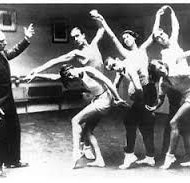
Rudolf Laban, The Miser

MoveScape Center, Denver Colorado

Colleagues’ recollections depict Rudolf Laban as a man possessed by creative energy, proliferating rough ideas and then rushing on without completing a line of thought, leaving the elaboration of his creations to someone else.

Laban’s private papers reveal a different picture. Archival traces show that Laban was steadily developing a grounded theory of human movement and utilizing consistent methods to develop hypothetical models. Moreover, archival materials also show that Laban was concerned to control the sheer number of elements in the systems he was building.… Read More

Rudolf Laban, Pattern Maker

MoveScape Center

Rudolf Laban‘s creative genius has given rise to the illusion that he was not systematic. But as I explain in The Harmonic Structure of Movement, Music, and Dance, his personal papers present a different picture.

Initially, Laban’s notes appear disorderly. Fragmentary writings and mysterious geometrical sketches abound, giving witness to Laban’s tendency to rush ahead with ideas without finishing them. Over time, however, themes recur and the thrust of Laban’s fertile mind begins to emerge. Moreover, the mysterious drawings begin to have meaning.… Read More

Rudolf Laban, System Builder

MoveScape Center

In recognizing movement as a psychophysical phenomenon, Rudolf Laban also perceived that human movement has two major aspects. One of these is the physical, visible motion of the material body through space. The second aspect is psychological – the thoughts and feelings that motivate the physical action.

The physical motion of the human body is readily perceptible and open to objective study. What motivates physical action is more subtle. We cannot “see” thoughts and feelings. Instead, the psychological aspects of movement must be inferred from how a physical action is performed.… Read More

Rudolf Laban Naturalist

MoveScape Center

According to his colleague Lisa Ullmann, Rudolf Laban’s formulations of the inherent laws of natural movement came to light gradually through his professional activities. Laban’s long and varied career provided ample opportunities to observe people in motion in a variety of settings: dance classes, theatrical rehearsals and performances, factories, schools, clinics, and other venues. If Ullmann’s comments are correct, Laban was a naturalist, studying nonverbal behavior in a number of real-life settings.

Nowadays, naturalistic inquiry is regarded as a legitimate form of research, one suited to the study of human behavior in complex social settings.… Read More

Rudolf Laban’s Creativity

MoveScape Center

Creativity is composed of four elements: originality, fluency, flexibility, and elaboration. Originality depends upon the novelty of an individual’s ideas. Fluency represents the sheer number of ideas that an individual can fabricate. Flexibility reflects difference in the kind of ideas produced. Finally, elaboration has to do with follow up – working out the details or perhaps seeing additional ways in which new things can be carried to the next level.

Arguably, Rudolf Laban possessed the first three attributes in abundance. His original notation and movement analysis systems provide inventive ways to capture and study the ephemeral phenomenon of human movement.… Read More

Extending Rudolf Laban’s Grounded Theory

MoveScape Center

“All of Rudolf Laban‘s life,” Irmgard Bartenieff writes, “was an unending process of defining the inner and outer manifestations of movement phenomenon in increasingly subtle shades and complex interrelationships.” The result of his relentless observing and categorizing is a grounded theory of human movement.

Grounded theory develops explanations of a phenomenon from an analysis of patterns, themes, and common categories discovered in observational research. Laban’s delineation of elements of human movement and relationships among these elements are the explanatory substance of his grounded theory.… Read More

The Warren Lamb Legacy: Freedom through Movement Analysis

MoveScape Center

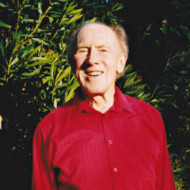
In the weeks since movement pioneer Warren Lamb died at the age of 90, I have had many occasions to reflect Warren’s life, our friendship, and what Warren fashioned from the insights he garnered from Rudolf Laban.

Laban referred to movement as “man’s magic mirror.” Lamb found a way to capture what is reflected in movement and give it practical relevance. In doing so, he moved far, far beyond “body language.”

The Movement Pattern Analysis profile Lamb developed reveals a person’s unique motivational pattern.… Read More

Movement Traits and Movement Factors

MoveScape

Warren Lamb‘s assessments of movement patterns draws upon principles established by the movement expert Rudolf Laban and the management consultant F.C. Lawrence. During the Second World War, these two men collaborated to enhance efficiency in British factories.

Their revolutionary approach utilized “trait and factor” theory in the following way. First, they identified the movement factors required for a given job. Next, they analyzed the movement traits of individual workers, based on observing each person’s movement patterns. Finally, Laban and Lawrence determined the degree to which an individual worker’s personal movement style matched the job requirements.… Read More

Movement Patterns Are Individually Distinctive

MoveScape Center, Denver

Bodily movement is ephemeral and illusive. Consider a simple action, like lifting the right arm overhead. At the beginning, as the right arm hangs by the side, there is stillness. At the ending when the arm arrives overhead, there is another momentary stillness. But the actual movement, the process of raising the arm, disappears even as it is happening.

Dance, the movement art par excellence, exists at a perpetual vanishing point. Yet, there is order and pattern to dance. The ballerina takes three steps to the right, then three steps to the left, turns and pauses.… Read More