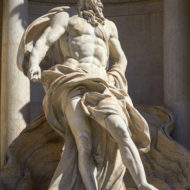

Men and Women are SO Different

It is generally believed that men and women are different from each other, biologically, mentally, emotionally, and socially. These beliefs give rise to stereotypic notions regarding the traits and abilities of each sex. Consequently, it is not surprising that people believe that women and men show distinctive patterns of nonverbal behavior.

Decades of research have tended to corroborate stereotypic differences between the sexes. For example, in comparison to women, men tend to take up more space; appear more relaxed; interrupt, stare, and touch more often; and smile less often.… Read More

Body Politics

In Body Politics, her seminal treatise on power, sex, and nonverbal communication, Nancy Henley asks, “What is the first judgment you make about people on initially seeing them? Is your first impression centered on dress, height, face, race, a certain look of the eyes? No, I believe a person’s sex is the first thing you see about them.”

The MeToo movement and current high profile cases of sexual misconduct have focused national attention on the relationship of power and sex.… Read More

Why Study Choreutics? Reason #4

The cardinal directions – up and down, right and left, forward and backward – form our most basic cognitive map of the space around the body. But according to Laban, the first fact of space-movement is “innumerable directions radiate from the center of our body and its kinesphere into infinite space.”

In other words, our cognitive map of space is highly simplified. Real movement through space is much more complex, full of deviations and deflections from the cardinal directions.

Laban engaged in a detailed yet patterned study of these innumerable lines of motion. … Read More

Why Study Choreutics: Reason #3

As various parts of the body traverse the kinesphere, the body itself changes shape.  As Laban understood, these changing bodily shapes were linked inextricably to effort, to the mental and emotional processes taking place simultaneously in the mover.

This brings us to reason Number Three for studying Choreutics:  Spatial forms are evocative.

One need only look at the work of Gian Lorenzo Bernini, the greatest Baroque sculptor, to experience the expressiveness of space. I had the opportunity to see his works during a recent trip to Rome. … Read More

Why Study Choreutics? Reason #2

In addition to providing landmarks in the kinesphere, Laban designed a number of spatial sequences and patterns as technical movement exercises.

Reason Number Two for studying Choreutics:  Laban’s patterns of movement through space enhance range of motion, balance, and coordination.

Choreutic forms – “rhythmic circles and scales” – are a tonic for the body. Range of motion, balance, and coordination are fundamental indicators of physical health.  Thus these are concerns, not only for dancer and athletes, but for everybody.

Laban’s Choreutic forms are based upon his understanding of joint structure and bodily proportions. … Read More

Why Study Choreutics? Reason #1

Students of Rudolf Laban’s work seem to fall into two camps:  those who like effort and those who like space harmony (aka Choreutics).  Or perhaps more accurately, there are those who love Choreutics, and those who loathe it.

Yet there are many reasons to study Choreutics.  Reason Number 1:  Effort and space go together.

Warren Lamb puts it quite simply:  “We cannot move in making an Effort without an accompanying movement of Shaping.  These are the two components of movement…  Laban made it quite clear that this duality [effort and space] was the basis of his work.”… Read More

Looking for Brave, Embodied Explorers

“Choreutics” is the term Laban invented to describe the spatial aspects of human movement. The term is a combination of two Greek words —  “chor” meaning circle and “eu” meaning “good.”  According to Laban, embodying the “good circles” that he designed  “can have a regenerating effect on our individual and social forms of life.” I’m looking for a few brave explorers to put Laban’s claims to the test.

In the forthcoming MoveScape Center seminar, “Decoding Choreutics: Part 2,” I reconstruct Choreutic forms that Laban developed in the 1920s. … Read More

Decoder’s Dilemma

Admittedly, Part 1 of Laban’s Choreutics is pretty tough going for readers. But Part 2 is even tougher for several reasons. While Laban wrote Part 1 in 1938-39, Part 2 was compiled by Gertrud Snell Friedburg ten years earlier, in 1929. When Lisa Ullmann edited Laban’s Part 1 manuscript, she decided to add Part 2. So, the tone of the writing changes. But that’s not all!

The “basic movement scales and configurations” that are discussed in Part 2 do not use the Labanotation direction symbols  Instead, Friedburg used an earlier system of numbers and letters to notate the pathways through space.Read More

Dancing Art Nouveau

In his first career as a visual artist, Laban was closely involved in the Art Nouveau movement.  Literally meaning “new art,” Art Nouveau was a self-consciously modern movement focused on the applied arts rather than the fine arts.  The movement expressed itself in innovations in architecture, furniture, fabric, dishes, lamps, jewelry – redesigning the everyday objects that people use and the spaces they inhabit.  

In short, Art Nouveau aimed to break with tradition and change the shape of the modern world.Read More

Laban’s “Deflected Direction” Hypothesis

Dimensions = stability and diagonals = mobility. Yet, according to Laban, “neither pure stability nor pure mobility exist.”  Natural human movement “is a composite of stabilizing and mobilizing tendencies.”

What is going on here?  Laban has taken a lot of trouble to delineate the dimensional and diagonal lines of motion.  And every Laban student, whether in a basic or advanced course, practices dimensional and diagonal sequences over and over again.  

Then Laban surprises us with the “deflected direction hypothesis.”  All of a sudden, he observes that “the deflected or mixed inclinations are more apt to reflect trace-forms of living matter.”Read More