Stability and Mobility

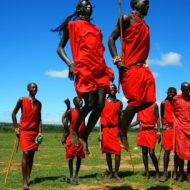
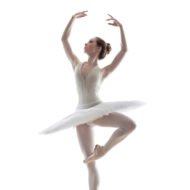
“Stability and mobility endlessly alternate,” Laban writes in Choreutics. This basic pattern underlies all movement through space. For instance, in a turning leap, spinning while flying through the air leads to a temporary loss of equilibrium. But when the feet touch the floor, there is a return to quietude and relative balance.

According to Laban, “movements containing dimensional tensions give a feeling of stability.” These fundamental lines of motion – up and down, across and open, backwards and forwards – are Laban’s stable prototypes.  Read More

Decoding Choreutics: The Next Step

Decoding-Choreutics-Next -Step

I’ve read the first part of Laban masterpiece, Choreutics (also known as The Language of Movement) many times.  And I’ve even developed a correspondence course designed to help other readers with this rich but difficult text.

However, I have to admit that reading Part 2 is a real challenge. Lisa Ullmann edited Laban’s manuscript, which makes up the first part of the book, several years after Laban’s death.  She added Part 2, which is based entirely on a compilation of “basic movement scales and configurations” made by Gertrud Snell Friedburg and presented to Laban for his fiftieth birthday in 1929.Read More

Lifetimes Spent Studying Movement

Lifetime-Spent-Studying

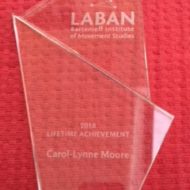
At the closing banquet of the LIMS 40th Anniversary Conference, three Lifetime Achievement Awards were presented to Bonnie Bainbridge Cohen, Peggy Hackney, and myself.

I’m sure I speak for the other two recipients when I say that it is a great honor to have one’s efforts recognized by colleagues. For all of us, the encounter with Rudolf Laban’s ideas and our studies so long ago with the remarkable Irmgard Bartenieff have been truly life-changing. Though our journeys have gone in different directions, they spring from the same roots.Read More

Films of Irmgard Bartenieff

Films-Of-Irmgard-Bartenieff

One of the opening events of the Laban Institute’s 40th Anniversary Conference included a couple of films of Irmgard Bartenieff leading a movement session with a young dancer. The rough footage probably dates from the 1960s. Several movement analysts who worked with Irmgard in the early days were asked to comment on the films.  An excerpt of my comments are posted below.

“Irmgard had very expressive hands. For such a slender and fragile looking woman, Irmgard’s hands always gave an impression of being larger than one would have expected. Read More

International Connections

International-Connections

Since MoveScape Center started running correspondence courses, it has been my pleasure to interact in virtual space with movement analysts on five continents. The LIMS Conference in New York made it possible to meet and learn more about the work of several of my correspondents, and to make new friends as well.

I was able to participate in the workshop of Lorella Rapisarda (Italy), whom I met through her participation in the “Decoding Choreutics course. Lorella’s elegant conference workshop explored “The Missing Pull;” or, more accurately, what to do when one cannot fall automatically into the next thing, but must cope with a static situation.Read More

A Bird’s Eye View of the LIMS Conference

Bird's-Eye-View-LIMS-Conference

A bird flying over Manhattan in early June would have detected several hot spots of movement activity and collegial exchange. Sites for the Laban Institute conference ranged from Hunter College on the upper east side, to midtown near Bryant Park, to Washington Square Park in the West Village.

With as many as four sessions running concurrently and over 200 participants, it is impossible to provide an encyclopedic report on the conference as a whole. Some highlights for me were the following sessions.Read More

LIMS Turns 40!

LIMS-Turns-40

The Laban/Bartenieff Institute of Movement Studies (LIMS) celebrated its 40th anniversary with a fabulous conference in New York City in early June. This international gathering was an embarrassment of riches, with fascinating workshops, panels, papers, and dance events.  

Forty years ago, I was part of the Founding Board of the Institute, and I remember clearly our first conference in 1979 (celebrating the centennial of Laban’s 1879 birth). We were a young group of founders, enthusiastic and somewhat inexperienced.   But in 1979, many of Laban’s colleagues were still active.Read More

Having a Good Fight

Many years ago while studying counseling psychology, I analyzed the “Gloria tapes.”  In these films three famous psychotherapists – Carl Rogers, Fritz Perls, and Albert Elllis – each interview the same young woman, Gloria.   Through my focus on the nonverbal dimension of the therapy session with Perls, I learned something about movement and fighting.

Mirroring, echoing, and synchrony are indicative of rapport. As I watched the videotape without sound, I saw many instances of these behaviors between Gloria and Perls.Read More

There Are No Collisions on the Dance Floor

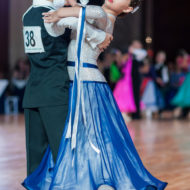
The play, “MASTER HAROLD” … and the boys”, takes place on a rainy afternoon in a South African tearoom during the period of apartheid. There are no customers – only the two black waiters, Sam and Willie, and Master Harold, the white adolescent son of the owners.  The “boys” are getting ready to participate in a ballroom dancing competition with their girlfriends.

As the three while away the afternoon, the boys practice dancing and describe the upcoming event for Master Harold.  Read More

Rapport through Dancing

Rapport-Through-Dancing

Nonverbal research has discovered that rapport is physical. Subliminal signals are sent body to body. In ordinary life, we feel the effect of these bodily signals – of mirroring positions, or echoing actions, or subtle synchronization of small motions – without perceiving them to be the cause of feelings of rapport.  In dance, the cause is much more obvious.

Dance makes patterns in time and space.  Dancing with others requires coordinating these patterns, keeping together in space and time.  All forms of dance use symmetry and synchrony to create patterns.Read More