Rudolf Laban, Painter and Dancer

MoveScape Center

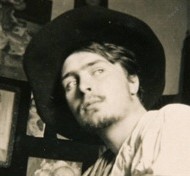
Rudolf Laban is known as a significant figure in 20th century modern dance. Yet he was 40 years old before he began to make a name for himself as a dancer. Prior to this time, Laban had been seriously engaged in the visual arts. And this first career as an artist decisively influenced his second career.

Laban studied art in Munich and Paris at the height of the popularity of the Art Nouveau movement. His surviving art works demonstrate his mastery of artist’s anatomy, proportion, and rendering in perspective – all staples of a traditional art training.… Read More

Humane Effort

MoveScape Center

Human effort is rich, complex, and quite variable. Nevetheless, every individual develops effort habits over time. One’s effort “personality” is the product of individual temperament. It is shaped by social circumstances and developed through movement training and the other activities one engages in – whether voluntarily chosen or not. Thus nature, nurture, and movement experience combine to generate an individual’s ingrained effort habits.

While much of our movement behavior is habitual, we are also able to think about how we move.… Read More

Movement Habits and Effort Awareness

MoveScape Center

Human effort is ubiquitous. From the time we rise in the morning until we retire at night, we engage in diverse endeavors – all of which require effort and skilled bodily motion.

Fortunately, many of these skilled motions have become habitual and require little conscious thought or reflection. Indeed, there are only a few occasions when we have to think about how we move. If a situation makes us self-conscious, we may become painfully aware of bodily movements. If injured, we may have to adjust the way we do things.… Read More

Effort and Virtuosity

MoveScape Center

It takes a special event to awaken us to the awesome variety and potential perfection of human effort. A virtuoso performance on the musical saw did so for me.

A recent concert by the Colorado Symphony included the “Habanera” from the opera “Carmen,” in which the well-known aria (usually sung by a soprano) was performed by soloist Caroline McCaskey on a saw. By holding the handle of the saw between her knees, bending the blunt metal tip with her left hand, and bowing the straight edge, she was able to replicate the tones of the human voice.… Read More

Human Effort is Omnipresent

MoveScape Center

In preparation for the MoveScape Octa seminar later this week, I have been thinking a lot about human effort. As Rudolf Laban perceived, “the animal world is rich in effort manifestations, but each animal genus is restricted to a relatively small range of typical qualities.” Human beings manifest a much richer range of motion and “can establish complicated networks of changing effort qualities.”

The results of human effort are all around us, for increasingly we spend our time in man-made environments, in homes, in office buildings, in vehicles that transport us from one to the other.… Read More

Effort and Consciousness

MoveScape Center

(This excerpt is taken from my book, The Harmonic Structure of Movement, Music, and Dance According to Rudolf Laban.)

As noted earlier, Laban initially perceived two fundamental psychological attitudes: one of resisting or fighting the physical conditions influencing movement, the other of yielding and accepting these conditions. These attitudes were used in the construction of bi-polar qualities for each of the four motion factors. In later years, Laban hypothesized correlations between these four motion factors and the four functions of consciousness theorized by Jung: sensing, thinking, feeling, and intuiting.… Read More

Human Effort and the Four Motion Factors

MoveScape

(The following passage continues the introduction to Rudolf Laban’s ideas about human effort. It is taken from my forthcoming book, Meaning in Motion: Introducing Laban Movement Analysis.)

Because movement is a psychophysical phenomenon involving the whole person, how someone moves reveals something about how they are feeling. The individual’s inner attitudes become visible through effort. Rudolf Laban characterizes these inner attitudes as “fighting or resisting” and “indulging or yielding.”

Movements are bound to evolve in space as well as in time, and in this evolution of movement the weight of the body is brought into flow.… Read More

Human Effort

MoveScape Center, Denver CO

(The following passage is taken from my forthcoming introductory textbook on Laban Movement Analysis, Meaning in Motion: Introducing Laban Movement Analysis. The following excerpt is from the chapter on effort.)

First and foremost, human effort is volitional. “Man moves in order to satisfy a need,” Rudolf Laban asserts. The voluntary motions we make require energy. Not only can we be more or less energetic when we move, we can also change the quality of energy applied. We can alter at will how we move.… Read More

The Mobius Body/Mind

MoveScape Denver

Generally, we think of surfaces, like a strip of paper, as having two sides. But a strip of paper can be twisted and its ends glued together to create a Mobius strip, a surface that has only one side. This means that if you start tracing a line on the outside of the Mobius strip, you soon find yourself tracing the line on the inside of the strip without having to lift your pencil. In other words, the outer becomes inner and the inner becomes outer.… Read More

Effort Balance

MoveScape Denver

Balance plays a significant role in Rudolf Laban’s thinking. This emphasis is understandable. As I note in The Harmonic Structure of Movement, Music, and Dance, “balance is a significant aspect of somatic experience… health, both mental and physical, is said to depend upon balance.”

Indeed, as Laban observes, the human body has to withstand a variety forces that can throw it out of balance – not only forces that arise in the outside environment but also those that come from within.… Read More