
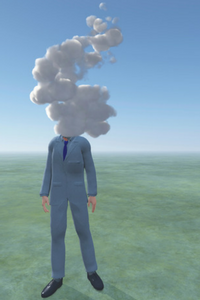
 The aim of choreutic practice, according to Rudolf Laban, is “to stop the process of disintegrating into disunity.” In his view, bodily movement “can have a regenerating effect on our individual and social forms of life.”
In our upcoming Advanced Space Harmony workshop, Cate Deicher and I intend to “push the envelope” by exploring new frontiers in choreutic practice. The workshop focuses on bringing seldom-taught space harmony sequences to life. This requires, as Laban notes, “integrating the bodily perspective, the dynamic feeling and the controlling faculties.” In other words, meaningful choreutic practice goes beyond just remembering and doing the scales. It aims to discover “the unity of movement,” to bring together the physical, emotional, and mental aspects of being human.
These three aspects are often in conflict. We muscle through fatigue or pain, ignoring what the body is telling us. We suppress our feelings, in an attempt to be “rational.” Or perhaps we give way to emotional outbursts that we later regret.
Nevertheless, we all experience moments of grace, when body, heart, and mind cohere and our intentions are seamlessly translated into action. Sports writer John Jerome referred to such moments as “a sweet spot in time – a coming together, a moment when what my mind intended was matched by what my body accomplished.”
Jerome goes on to call this “a momentary healing of the mind-body split… it haunts me still because it was magic.” Laban agrees: “It is, without doubt, a fact that such a unity existed in ancient times in the paths of gestures which we have called trace-forms. Because it could not be explained, it assumed a magic significance and it is curious that even now it remains magical, in spite of being analysed.”
Put some magic in your life. Join us for the Ico workshop, “Advanced Space Harmony: New Choreutic Forms for Movement Invention,” December 3-4, in New York City.
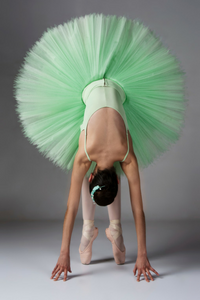 I may think the Denver Art Museum’s “Summer of Dance” is splendid, but the Denver Post’s critic disagrees. He writes, “As a theme, ‘dance’ is, frankly, thin, a fringe topic that’s wholly without risk and lacks the kind of gravitas that a serious museum has the skill and resources to tackle.” Other phrases are similarly dismissive: “escapism,” “light touch,” “fun,” and finally, in response to the display of Anna Pavlova’s tutu – “This year, its feathery fluffiness feels like a metaphor for the whole lineup at DAM.”
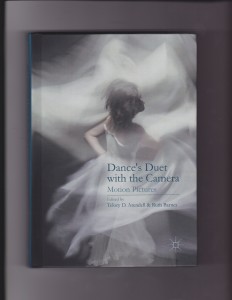 I am happy to announce the publication of Dance’s Duet with the Camera. This collection of essays, edited by Telory D. Arendell and Ruth Barnes and published by Palgrave Macmillan, “takes on the difficult task of verbalizing how the live aspects of present, sweaty, energy-driven dancers might collaborate with the more staid, focused, and digitally manipulated forms of either
  In addition to developing physical skills, Choreutic practice also challenges movers intellectually. It gives us a way to think about space.
 “Why are we learning this?” Anyone who has ever taught Space Harmony will have heard this question from students. In fact, many Certified Movement Analysts have themselves struggled with this part of Laban’s work. But the study of
 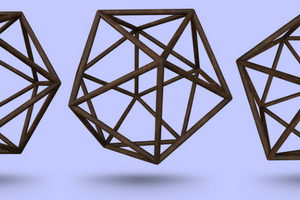 In July, with the Octa workshop, “Bringing Choreutics to Life,” I took these theories forward into practice. During this intimate three-day workshop, we reviewed well-known Choreutic sequences to illuminate their rational structure and to explore how Laban’s ideas can be transformed into rich kinesthetic and expressive experiences, integrating body and mind.
 by Kathie Debenham
 by Laurie Cameron
 In the Vaccination Theory of Education, students are led to believe that once they have “had” a subject, they are immune to it and need not take it again.
 by Nancy Beardall